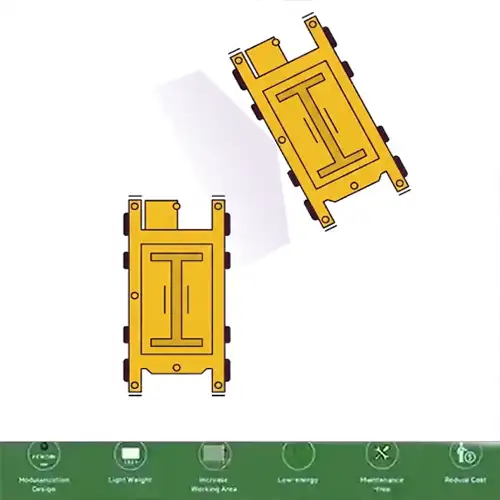
Straddle Carrier Collision Warning System for Safer Container Handling
Advanced obstacle detection and operator assistance system for reducing collisions in port and terminal operations
| Crane Type | Straddle Carrier Straddle Carrier Crane |
| Crane Capacity | 30 Ton to 80 Ton |
| Span Length | Customized |
| Lifting Height | Customized |
| Coverage Area Type | Square / Rectangular, Linear travel / Rotation 360 degree steering |
| Application | Port container yards, high-density stacking yards, 24/7 logistics hubs, automated terminals, rail intermodal yards, BESS container yards, industrial construction sites, multi-equipment port operations, confined yard spaces, smart port safety systems. |
| Certifications | CE / ISO / SGS / Other third-party inspection |
| Customization | Customized material handling cranes solutions available for indoor, outdoor, hazardous, corrosive, c |
Category: Straddle Carrier
Tags: straddlecrane
Your Trusted Straddle Carrier Manufacturer & Supplier
Straddle Carrier Collision Warning System
When Safety Is Your Driver in Straddle Carrier Operations
Reduce collisions, accidents, and equipment damage in daily yard work
In a container yard, straddle carriers work in a busy and fast-moving space. They travel between stacks, reverse in narrow lanes, and operate close to other machines and containers. In these conditions, safety is not something that can be ignored or checked later. It has to be part of normal operation.
Collisions usually do not happen because of one big error. They happen in simple situations—limited visibility, short reaction time, or not seeing an obstacle early enough. Even a low-speed contact can still cause real problems.
- Damage to containers
- Spreader impact or misalignment
- Tire, chassis, or structural repair work
- Unplanned machine downtime
- Delays in yard operation flow
One small incident can slow down the whole working area. Other machines may need to wait, and operators often become more careful after that, which can reduce overall efficiency.
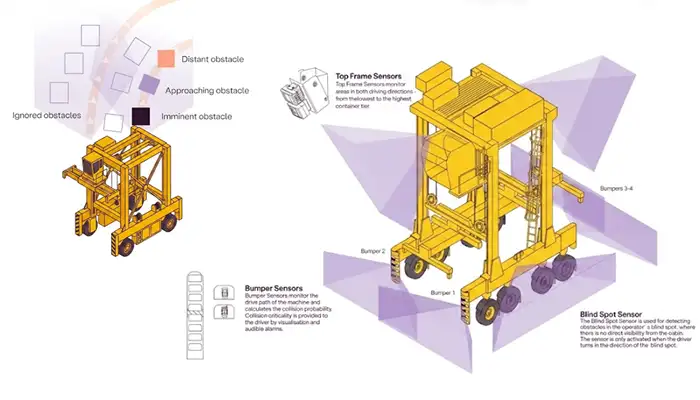
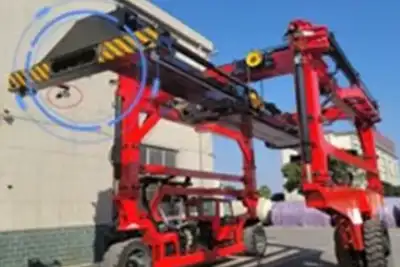
The Straddle Carrier Collision Warning System is designed to support operators during these situations. It does not replace the driver. It helps the driver notice risks earlier, especially in tight or busy yard conditions.
The system keeps checking the surrounding area while the machine is moving. When something gets too close or enters the working path, it alerts the operator immediately.
- Visual warning on the cabin display
- Sound alarm for quick attention
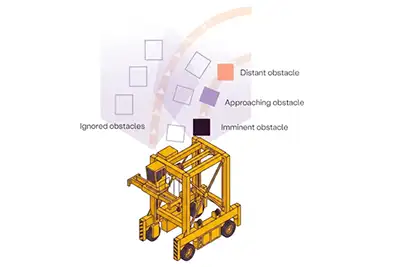
- Different warning levels based on distance
The purpose is simple: give the operator more time to react. Even a few seconds can help avoid contact.
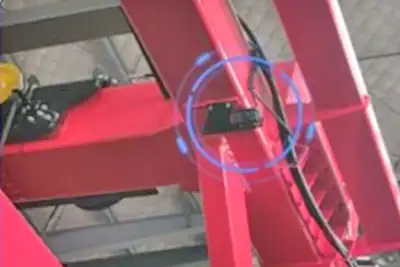
camera
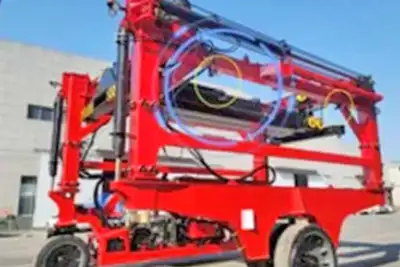
camera
camera
camera
Collisions affect more than repair cost
In real yard operations, the impact of a collision goes beyond fixing damaged parts. It affects how the entire yard works.
When a straddle carrier stops suddenly, the movement around it is also affected. Containers may be delayed, other equipment may need to adjust, and the work sequence can be interrupted.
- Delays in container handling
- Interrupted stacking or transport flow
- Extra coordination between operators
- Slower yard movement during peak hours
Because of this, safety is not only about preventing damage. It is also about keeping the whole operation stable and predictable.
What the system does
The collision warning system is built for real working conditions in container yards, not controlled environments.
It helps detect objects around the straddle carrier, including:
- Other straddle carriers
- Container stacks
- Obstacles in travel paths
- Blind spots during turning or reversing
- Spreader and load movement area
When a possible risk is detected, the system immediately sends a warning to the operator through clear signals. The operator can then slow down, stop, or adjust direction.
The main goal is simple: help operators notice risks earlier and reduce the chance of contact during daily work.
If you want to improve safety and reduce collision risks in straddle carrier operations, you can start with a technical discussion.
- Request Technical Consultation
- Get Safety System Proposal
The Real Cost of Collisions in Straddle Carrier Operations
Collisions are not only about equipment damage
In a working container yard, straddle carriers move continuously between stacks, loading areas, and transport lanes. When a collision happens, even a low-speed one, the impact is rarely limited to the machine itself.
It affects the operation schedule, interrupts normal flow, and often creates more work than expected. In many cases, the real cost is not seen immediately, but it builds up through delays and recovery work.
Collisions and damage to straddle carriers in your yard can cost your business time, money, and operational stability. At the same time, they also affect safety conditions and reduce the smoothness of daily terminal operations.
Key impacts of straddle carrier collisions
When a collision or near-miss happens in daily operation, the effects usually appear in several areas at once:
- Equipment repair and replacement costs, including structural parts, tires, or spreader components
- Unplanned downtime, where the machine is taken out of service for inspection or repair
- Damage to containers or spreaders, which can delay cargo handling or require re-handling
- Increased safety risk for operators working in the same traffic zone
- Reduced terminal efficiency, especially during peak operation hours when every machine counts
Each of these points may look manageable on its own. But in real operation, they often happen together or one after another.
What this means in real yard conditions
In high-density container yards, space is limited and movement is constant. Operators are working under pressure, and visibility is not always perfect, especially during night shifts, bad weather, or crowded stacking areas.
In these conditions, even small human errors or missed visual cues can lead to serious operational interruptions. A slight misjudgment of distance, or a late reaction, can be enough to cause contact.
Over time, these small incidents can create a pattern—more downtime, higher maintenance cost, and less predictable yard performance.
Why Safety Must Be a Core Driver, Not an Option
Safety directly influences daily yard productivity
In straddle carrier operations, safety is not only about compliance. It affects how smoothly the entire yard runs. When safety is integrated into daily operation, performance becomes more stable and predictable.
Key impact overview
| Area | What Happens Without Strong Safety Support | What Improves With Safety System |
|---|---|---|
| Throughput | Sudden stops, interrupted movement, inconsistent flow | Smoother operation, fewer interruptions, more stable handling speed |
| Equipment availability | Frequent downtime due to inspection or repair | Higher uptime and more reliable shift planning |
| Operator workload | High attention demand, fatigue in busy yards | Early warnings reduce stress and reaction pressure |
| Operational cost | High repair and delay costs after incidents | Lower total cost through prevention of collisions |
| Yard efficiency | Delays spread across multiple operations | More controlled and continuous container movement |
Core understanding
- Safety is not separate from productivity; it supports it directly
- Most collisions start from small delays in reaction or limited visibility
- Preventing one incident avoids repair, downtime, and operational disruption together
- In daily yard work, stable safety conditions lead to stable production output
When safety is treated as part of operation—not an add-on—the entire straddle carrier system works with fewer interruptions and more consistent performance.
What Is a Straddle Carrier Collision Warning System?
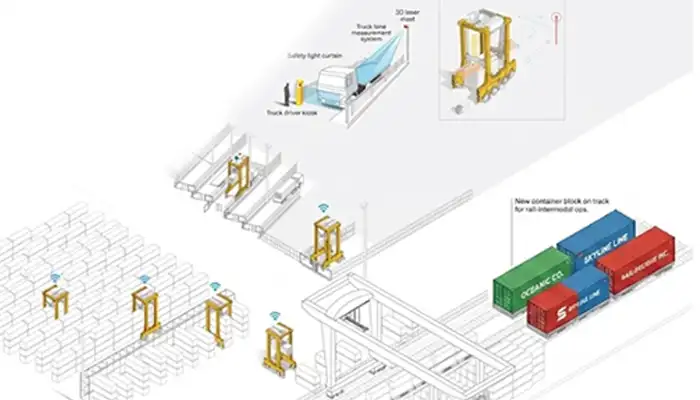
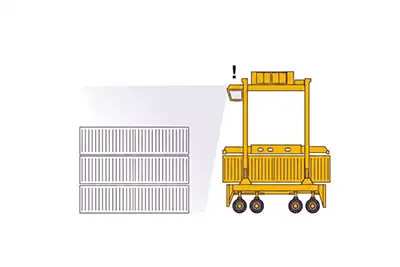
A Straddle Carrier Collision Warning System is a real-time safety assistance system designed to detect obstacles around the machine and warn the operator before a collision happens.
In daily yard operation, it works as an extra layer of awareness. It does not take control of the machine. Instead, it continuously monitors the working area and gives early warning when something is too close or in the travel path.
anticollision straddle carrier
anti-collision container straddle carrier
anti-collision straddle carrier
Purpose of the system
The main purpose is simple: help reduce collisions and protect both equipment and operation flow.
In real working conditions, straddle carriers operate in narrow lanes, busy container stacks, and mixed traffic areas. In these environments, even a small delay in reaction can lead to contact.
This system helps by:
- Detecting nearby obstacles in advance
- Warning the operator in real time
- Reducing the chance of collision during movement
- Minimizing damage when sudden risks occur
- Supporting safer and more stable yard operation
It is built for prevention, not reaction after damage.
Application areas
The system is used in different types of container handling and logistics environments where straddle carriers operate under continuous movement and high traffic conditions:
- Container terminals, where loading and unloading cycles are continuous
- Port logistics yards, with mixed heavy equipment movement
- Intermodal transport hubs, where transfer operations require tight coordination
- High-density storage yards, where space between stacks is limited
In all these areas, the working condition is similar—high activity, limited space, and constant machine interaction. This is where collision risk naturally increases, and early warning support becomes useful in daily operation.
How the Collision Warning System Works
Sensor-based monitoring of the working area
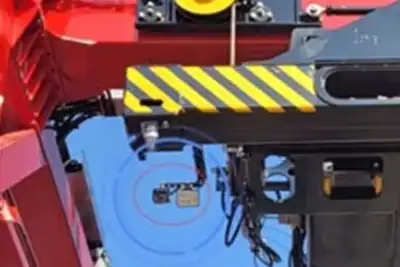
The system starts with continuous scanning around the straddle carrier. Multiple sensors are installed on key positions of the machine to monitor the surrounding space during operation.
It keeps checking what is happening around the equipment while it is moving, loading, or reversing.
It can detect common obstacles in real yard conditions, such as:
- Other vehicles and straddle carriers
- Container stacks and ground-level structures
- Equipment working nearby
- Personnel in the operating zone
The aim is simple: keep the operator aware of what is close to the machine, even when visibility is limited.
Real-time processing of movement and risk
All sensor data is processed in real time. The system does not just detect objects—it evaluates how close they are and how the machine is moving.
It continuously analyzes:
- Distance between the straddle carrier and nearby objects
- Movement direction and speed of the machine
- Whether the object is static or moving
- Risk level based on closing distance
This helps the system understand not only "what is there," but also "how fast a risk is forming."
Operator warning inside the cabin
When a potential risk is identified, the system immediately informs the operator. The warning is designed to be clear and easy to understand during active operation.
- Visual alerts shown on the cabin display
- Audible alarm for immediate attention
- Graded warnings based on risk level (low, medium, high)
The idea is to avoid confusion. The operator receives a simple signal and can act without delay.
Simple operator response cycle
The system supports a clear and practical reaction flow in real operation:
Detection → Warning → Operator action → Collision avoidance
In most cases, the system provides early enough warning so the operator can slow down, stop, or adjust direction smoothly. It does not replace operator control. It supports faster awareness so the operator can make safer decisions in real time.
Key Safety Functions of the System
Core safety capabilities in daily straddle carrier operation
In real container yard work, safety is not based on a single function. It depends on multiple detection and monitoring layers working together at the same time. The system is designed to support the operator during continuous movement, especially in crowded or low-visibility conditions where reaction time is limited.
It focuses on helping the operator understand what is happening around the machine in real time, and giving clear warnings before contact occurs.
Main safety functions
The system supports several core safety functions that work continuously during operation:
- Multi-directional obstacle detection for surrounding area coverage during movement
- Blind spot monitoring to reduce risk during turning, reversing, and narrow lane operation
- Spreader and load path protection to avoid contact during lifting, lowering, and container handling
- Real-time hazard recognition based on continuous sensor input
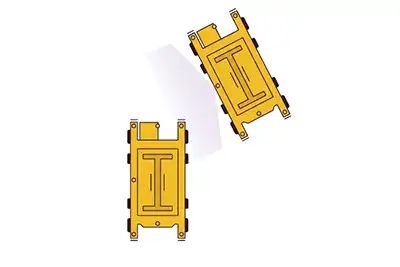
- Dynamic risk assessment that adjusts warning level based on speed and direction
- Night and low-visibility operation support for fog, rain, and low-light yard conditions
How these functions work in practice
These functions are not separate tools. They work together as one system during daily operation. When the straddle carrier moves, the system continuously checks distance, direction, and surrounding objects, then calculates whether a risk is forming.
The operator receives simple and clear warnings based on that analysis. This helps reduce reaction delay, especially in busy terminal environments where multiple machines operate close to each other.
Practical outcome in yard operations
In real use, these safety functions help operators maintain better awareness without increasing workload. The system supports safer turning, reversing, and container handling, especially in tight or high-traffic areas.
Over time, this leads to fewer contact incidents, more stable equipment movement, and smoother yard coordination during peak operation hours.
How It Protects Your Operation
Protection built into daily straddle carrier movement
In real container yard operations, protection is not only about avoiding accidents. It is about keeping the whole working flow stable while machines are moving continuously. The collision warning system supports this by helping operators react earlier in situations where visibility or timing is limited.
It works quietly in the background during normal operation and becomes active when risk appears in the working path.
Operational protection layer
The system provides practical protection across the most common risk areas in straddle carrier work. It helps reduce direct contact and supports safer movement in tight and busy yard conditions.
- Prevents straddle-to-straddle collisions during close traffic operation
- Reduces spreader and container impact damage during lifting and positioning
- Supports safer reversing and turning in narrow lanes and stacked container areas
- Enhances operator situational awareness in blind spots and crowded zones
Each of these functions works together. The goal is not only to detect danger, but to help the operator avoid it in time with clear warnings.
Safety outcome in real yard conditions
When these protections are applied during daily operation, the effect is usually seen across the whole yard, not just one machine.
Operations become more stable because there are fewer unexpected stops. Equipment stays in service for longer periods. Operators also work with more confidence, especially in dense traffic areas where movement coordination is critical.
- Fewer accidents during routine handling work
- Fewer interruptions in container flow
- More stable and predictable yard performance
In practice, this means the yard keeps moving without frequent disruption, even during peak operation hours.
Value that goes beyond collision prevention
In daily straddle carrier operations, safety systems are often seen as protection tools. But in real yard performance, they also play a direct role in reducing operating cost and keeping equipment in service for longer periods.
When collisions and near-misses are reduced, the impact is not only safer operation. It also improves how efficiently the entire fleet is used over time.
Core value statement
The system actively reduces operational risks while supporting more stable long-term equipment performance. It helps operators avoid situations that usually lead to damage, downtime, and unexpected maintenance work.
Practical benefits in real operations
When the system is in continuous use during yard movement, the benefits appear in several practical areas:
- Lower maintenance and repair costs due to fewer collision-related damages
- Reduced unplanned downtime, keeping machines available for scheduled operations
- Higher fleet availability, especially during peak handling periods
- Longer equipment service life by reducing repeated impact stress on key components
- Lower risk of container handling damage during lifting, moving, and positioning
Real operational impact
In practice, fewer small incidents make a clear difference over time. Machines stay in working condition longer, maintenance becomes more predictable, and yard operations run with fewer interruptions.
This is where the value is often seen—not in one single event, but in the steady reduction of avoidable damage during everyday work.
Operational Applications
Where the system is actually used in daily yard work
In container terminals and logistics yards, working conditions are rarely stable or simple. Traffic changes during the day, container stacks become denser, and multiple machines operate in the same area at the same time. These are exactly the situations where a collision warning system is most useful.
It is not designed for isolated or controlled movement. It is built for real working environments where straddle carriers must operate close to obstacles, other vehicles, and tight handling spaces.
Where the system works best
The collision warning system provides the most value in working conditions where space is limited and movement is continuous. These scenarios usually carry a higher risk of close contact or delayed reaction.
- High-traffic container stacking areas where multiple straddle carriers operate between closely placed containers
- Shuttle transport operations where machines move repeatedly between fixed loading and unloading points
- Narrow aisle yard movement where turning space and visibility are restricted
- Mixed equipment working environments where straddle carriers share space with trucks, reach stackers, or cranes
- Peak-hour terminal operations when movement density and workload are at the highest level
Practical operation outcome
In these conditions, operators rely heavily on awareness and quick judgment. The system supports this by giving early warning when something enters the working path or gets too close to the machine.
Over time, this helps reduce unexpected stops, improves movement coordination between machines, and supports smoother operation even during busy shifts.
Installation and Retrofit Capability
Flexible deployment for different fleet conditions
In real projects, not every terminal starts with new equipment. Many yards already operate straddle carriers in active service, while some are planning new fleet upgrades. The system is designed to work in both situations without changing normal operation structure too much.
It can be applied during new machine delivery or added later as an upgrade to existing equipment. This flexibility helps terminals improve safety step by step, instead of waiting for full fleet replacement.
Flexible deployment options
The system can be integrated based on your operational situation and project plan:
- New straddle carrier integration during manufacturing or delivery stage
- Retrofit installation on existing fleet already in daily operation
This makes it suitable for both expansion projects and safety upgrade projects in active terminals.
Installation workflow in practical steps
The installation process is planned in clear stages to match real yard conditions and reduce interruption to operations. Each step focuses on ensuring the system works correctly in the actual working environment.
- Site evaluation and risk mapping based on yard layout and traffic flow
- Sensor layout design according to machine structure and working zones
- System installation on straddle carrier units
- Calibration and functional testing in real operating conditions
- Operator training for warning signals and system response
Each step is carried out with focus on practical operation, not only technical setup.
Operational downtime and disruption
Installation is planned to avoid long shutdown periods. In most cases, the work can be coordinated with maintenance schedules or planned service windows.
Operational downtime is kept to a minimum during installation and commissioning, so the fleet can return to normal service quickly without major interruption to yard activity.
System Integration with Straddle Carrier Operations
How the system fits into existing machine operations
In real terminal environments, safety systems must work with the straddle carrier, not separately from it. Operators should not feel they are using an additional layer of complexity. Instead, the system should connect naturally with the machine's normal operation flow.
This collision warning system is designed to integrate with key parts of the straddle carrier so that information is delivered directly where the operator already works and responds.
Main integration areas
The system is connected with several important operational and control points of the straddle carrier to ensure clear and fast response during movement.
- Vehicle control systems to support real-time safety interaction during operation
- Operator cabin display systems where warnings and status information are shown clearly
- Alarm and warning interfaces that provide both visual and audible alerts
- Optional automation safety systems for terminals using semi-automated or advanced control setups
Practical operation effect
Once integrated, the system works in the background during normal movement. The operator does not need to manage it separately. When a risk appears, the warning is shown directly in the cabin and through sound signals, allowing quick and simple reaction.
This helps reduce reaction delay, especially in busy yard conditions where operators are already focused on multiple tasks at the same time.
Result in daily yard work
With proper integration, the system becomes part of normal operation rather than an external add-on. It supports safer movement, clearer decision-making, and more stable control during container handling activities without changing how operators naturally work.
Operational Limitations and Working Conditions
What to expect in real yard environments
A collision warning system is designed to improve safety during daily straddle carrier operations, but like any sensor-based system, its performance depends on working conditions. In real container terminals, environment, speed, and maintenance practices all play a role in how the system responds.
Understanding these conditions helps operators use the system correctly and maintain stable performance over time.
Transparency on operating conditions
In practical use, the system may show different performance levels depending on the environment and operation style. These points are important for real-world expectations:
- Performance variations in extreme weather such as fog, heavy rain, or dust conditions that may reduce sensor clarity
- Speed-dependent detection accuracy, where reaction distance and warning timing change based on operating speed
- Minimum detection range considerations, meaning very close objects may be detected within limited reaction time
- Required periodic calibration and maintenance to keep sensors aligned and detection performance stable over long-term use
Practical understanding in daily operations
In real yard work, conditions are not always stable. Weather changes, lighting conditions vary, and traffic density can increase during peak hours. The system is designed to support operators in these environments, but it still relies on proper maintenance and correct usage.
Regular checks and calibration help maintain consistent performance, especially in terminals where equipment operates continuously across multiple shifts.
Key takeaway for operators
The system is built for real industrial conditions, not ideal environments. When used with proper maintenance and awareness of its working limits, it provides reliable support for reducing collision risk and improving overall operational safety.
Case Study Example
How the system performs in real container terminal operations
In busy container terminals, straddle carriers operate continuously under high traffic pressure. Machines move between stacks, loading points, and transport lanes, often within narrow working spaces. In such environments, small delays in reaction or limited visibility can easily lead to contact between equipment or containers.
This case example reflects a typical terminal application where a collision warning system was introduced to improve operational safety and reduce avoidable incidents during daily work.
Deployment insight from a container terminal
In a real container terminal deployment, the system was installed across a fleet of straddle carriers operating in high-density storage and shuttle movement zones. The goal was not to change the operation method, but to support operators with earlier risk awareness during normal working conditions.
The system was used during:
- Continuous container stacking operations
- Shuttle transport between yard blocks
- Peak-hour mixed traffic movement
- Reversing and tight turning operations in storage lanes
Operators received real-time visual and audible warnings when obstacles entered the working path or when safe distance was reduced during movement.
Fleet-level safety improvement
After implementation across multiple units, the improvement was not limited to a single machine. The effect was seen at fleet level, especially in areas with frequent interaction between straddle carriers.
- Fewer minor collisions between straddle carriers during yard movement
- Reduced contact incidents with container stacks during positioning
- Improved awareness in blind spot and reversing operations
- More consistent operator response in high-traffic zones
The system helped operators react earlier, especially in situations where visual judgment alone was not enough.
Reduced collision frequency in daily operations
Over time, the terminal reported a noticeable reduction in small impact incidents. Most improvements were related to low-speed collisions and near-miss situations, which are common in dense yard environments.
These reductions helped lower unplanned maintenance events and reduced interruptions in container handling cycles.
Improved operational consistency in dense yards
One of the most practical outcomes was improved consistency in daily operations. Even during peak hours, when multiple machines were working in the same area, movement became more controlled and predictable.
- Fewer unexpected stops during container handling
- Smoother coordination between operators
- Reduced disruption in stacking sequences
- More stable workflow during high-density operations
In real yard conditions, this consistency is often more valuable than isolated performance improvements, because it directly affects how smoothly the entire terminal operates across shifts.
Why Choose a Collision Warning System for Straddle Carriers
A practical safety upgrade for real yard operations
In daily straddle carrier work, safety is not only about avoiding accidents. It is about keeping the whole yard running in a stable and controlled way, especially when traffic is dense and movement is continuous.
A collision warning system supports this by giving operators earlier awareness of surrounding risks and helping reduce avoidable contact during operation.
Key decision points
The value of the system is usually seen across several practical areas in terminal operation:
- Safety improvement across the entire fleet through consistent risk detection support
- Reduced operational risk exposure in busy and high-density container yards
- Improved terminal efficiency by reducing interruptions and unplanned stops
- Strong return on investment through lower damage repair and downtime costs
- Better operator confidence and reduced fatigue during long and repetitive shifts
Practical takeaway
In your operation, small collisions and near-misses can affect more than one machine. They can slow down the flow of the whole yard. A collision warning system helps reduce these situations and keeps operations more stable during daily work.
FAQ Solved
Practical answers for real straddle carrier operations. In container terminal projects, buyers usually focus on how the system fits into existing equipment, how it performs in real working conditions, and what kind of downtime or maintenance is involved. The following questions cover the most common concerns from operators and procurement teams.
Can it be installed on existing straddle carriers?
Yes. The system can be installed on both new straddle carriers and existing fleets. It is designed for retrofit use, so terminals do not need to replace equipment to improve safety. Installation is planned according to machine structure and yard operation schedule.
Does it work in night and low visibility conditions?
Yes, it is designed for continuous operation during day and night. It supports low visibility situations such as night shifts, fog, rain, and dusty environments. However, performance may vary depending on extreme weather conditions, so proper sensor maintenance is important for stable results.
How does the system detect obstacles?
The system uses multiple sensors installed around the straddle carrier to scan the surrounding area during operation. It detects nearby objects such as vehicles, containers, structures, and personnel, and calculates risk based on distance, direction, and machine movement.
Does installation require long downtime?
No. Installation is planned to minimize disruption to normal operations. In most cases, it can be completed alongside scheduled maintenance or planned service windows, so the straddle carrier does not need long-term shutdown.
What maintenance is required?
The system requires regular basic maintenance to ensure stable performance. This includes sensor cleaning, system calibration checks, and periodic inspection of wiring and warning interfaces. With proper maintenance, the system can operate reliably in continuous yard conditions.
Contact : Make Safety the Driver of Your Straddle Carrier Operations
In real container yard operations, safety is not an extra feature. It is part of how smoothly and reliably your equipment performs every day. When collision risks are reduced, operations become more stable, downtime is minimized, and equipment lasts longer in service.
With intelligent collision warning technology, you can reduce collisions, minimize equipment damage, and support safer and more efficient container handling across your entire yard. It is a practical step toward more controlled and predictable straddle carrier operation.
Latest project
150 Ton Overhead Crane Installation Feedback – Paraguay Case
QDX 150 ton overhead crane in action in Paraguay. Installation photos, video, and client feedback show performance, safety, and heavy-lifting efficiency.
Free consultation to Confirm Parameters & Specifications and Get
Latest Crane Price & Crane Rate.
- Types of overhead cranes : _______?
- Optional: Overhead travelling crane, goliath gantry crane,Slewing jib crane, Single girder or double girder crane,small portable crane or kbk crane, etc.
- Capacity of overhead crane: _______?
- Optional: 0.25ton, 0.5 ton, 1 ton, 2 ton, 3ton, 5 ton, 10 ton,15ton, 20ton, 25 ton, 30ton,35ton, up to 550ton, etc.
- Crane span & lifting height : _______?
- Crane travelling length : _____?
- Control of overhead crane:_______?
- Optional: pendant/ remote/cabin control
- Voltage supply of overhead crane:_____?
- Eg,: 380V50/60HZ,3Phase or others,etc.
- Application/usage of crane:_______?
- Eg,: Steel mill, ,injection mold, cement,stone, concrete,granite, general manufacturing, etc.
Just leave a message via the contact form and our hoist and crane engineer will contact you with in 24working hours.
Get In Touch